
China Foldable Phone Market Share
The foldable phone market has rapidly emerged as a significant segment in the global smartphone industry, with China leading the way in adoption and innovation. China’s foldable phone market, which has been steadily growing over the past few years, is poised to capture a large portion of the global market share. By 2024, the foldable phone market in China is valued at approximately USD 6 billion, accounting for a considerable percentage of global foldable phone sales. This growth is primarily driven by advancements in display technologies, consumer demand for new and innovative form factors, and the competition among top Chinese smartphone manufacturers.
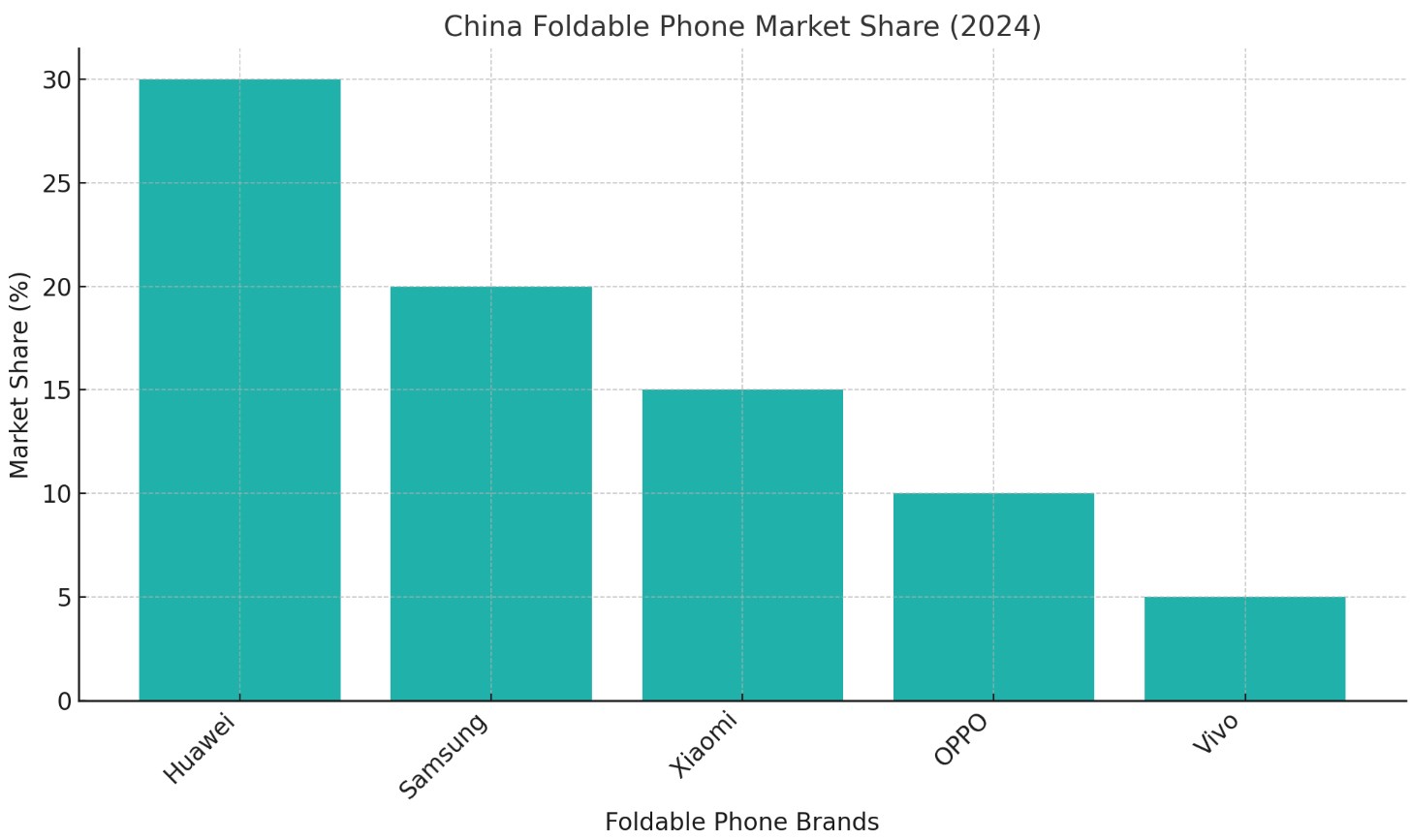
China’s dominance in the foldable phone market is reflective of the country’s broader position in the global smartphone industry. Chinese manufacturers have quickly adapted to new technologies and incorporated foldable displays into their flagship models, allowing them to secure a significant market share. The competition in the foldable segment is intense, with several key players vying for dominance. These include tech giants like Huawei, Samsung, Xiaomi, OPPO, and Vivo, all of which have launched foldable phones in the Chinese market to varying degrees of success.
China’s strong presence in the foldable phone market is a result of several factors, including innovation in product design, supply chain control, and significant investments in research and development (R&D). Chinese consumers, who are early adopters of technology, have been quick to embrace the new foldable smartphones, contributing to the sector’s rapid growth. With the backing of the Chinese government’s push towards technological self-reliance and the country’s robust digital ecosystem, foldable phones are becoming an increasingly popular choice for Chinese consumers looking for cutting-edge devices.
Factors Driving the Growth of China’s Foldable Phone Market
Technological Advancements and Innovation
The primary driver of the foldable phone market in China has been technological advancements. Innovations in flexible OLED displays, hinges, and battery technologies have made foldable phones more practical, durable, and appealing to consumers. The introduction of thinner and more flexible OLED screens has allowed manufacturers to create foldable devices with improved display quality and performance. As these technologies continue to evolve, foldable phones are expected to become more affordable and widely adopted, further driving market growth.
In addition to display technology, advancements in battery technology are crucial for the development of foldable phones. The need to balance performance with battery life in a compact form factor has led to innovations in battery design, which are critical to the success of foldable phones. Manufacturers have been investing heavily in R&D to create batteries that are thinner, lighter, and capable of maintaining long battery life despite the foldable design.
Consumer Demand for Innovation and New Experiences
Consumer demand for innovative, high-performance smartphones is another driving force behind the growth of the foldable phone market in China. As smartphones become increasingly integrated into daily life, consumers are seeking devices that offer more than just incremental improvements in performance. Foldable phones present an opportunity for manufacturers to deliver something new, both in terms of form factor and functionality.
The ability to have a larger screen in a compact, portable design is highly appealing to many consumers. With the rise of mobile gaming, streaming services, and multitasking, the demand for larger screens in smartphones has grown significantly. Foldable phones offer an attractive solution by allowing users to enjoy a larger screen without the need to carry around bulkier devices. This functionality has attracted early adopters and tech enthusiasts, leading to an increasing number of foldable phone sales in China.
Government Policies and Investment in Technology
The Chinese government’s focus on advancing the country’s technological capabilities has also contributed to the rapid growth of the foldable phone market. As part of the “Made in China 2025” initiative, the government has heavily invested in research and development across various high-tech sectors, including smartphone manufacturing. This push for self-reliance in technology has encouraged Chinese companies to develop and produce cutting-edge devices, such as foldable phones, and has provided them with a favorable environment in which to innovate and compete.
Additionally, government policies that support domestic manufacturing and reduce dependence on foreign technologies have enabled Chinese companies to dominate the foldable phone market. These policies encourage the use of locally sourced components and materials, which further strengthens the competitiveness of Chinese foldable phone manufacturers. The government’s support has allowed domestic players to focus on innovation and capture a significant share of the global market.
Major Players in China’s Foldable Phone Market
Huawei
Market Share Overview
Huawei, one of China’s leading technology companies, has emerged as a key player in the foldable phone market. The company launched its first foldable phone, the Huawei Mate X, in 2019, and has since expanded its portfolio with the Huawei Mate X2 and Huawei P50 Pocket, among others. As of 2024, Huawei holds a dominant market share of around 30% in China’s foldable phone market.
Key Strengths and Factors Contributing to Market Share
- Innovative Foldable Designs: Huawei has been at the forefront of foldable phone design, with its Mate X series being one of the first to feature a foldable display on the outside of the device. This design allows for a larger screen when unfolded, making it a standout feature in the foldable phone market. Huawei’s innovative approach to foldable phone design has helped the company secure a strong presence in the market.
- Strong Brand Recognition and Consumer Trust: Huawei’s established brand reputation for high-quality smartphones has played a key role in driving consumer interest in its foldable devices. Despite challenges related to its global presence, Huawei remains a trusted brand in China, and its foldable phones are highly regarded by Chinese consumers for their performance and design.
- Integration with Huawei’s Ecosystem: Huawei’s foldable phones are tightly integrated with the company’s broader ecosystem of products and services, including Huawei’s HarmonyOS and its range of smart devices. This seamless integration enhances the user experience and encourages customers to invest in Huawei’s foldable phones.
Samsung
Market Share Overview
Samsung, the global leader in the foldable phone market, has a strong presence in China as well. Although it faces significant competition from domestic brands like Huawei and Xiaomi, Samsung’s foldable devices, such as the Galaxy Z Fold and Galaxy Z Flip, have captured the interest of high-end consumers. Samsung holds a market share of approximately 20% in China’s foldable phone segment as of 2024.
Key Strengths and Factors Contributing to Market Share
- Experience in Foldable Technology: Samsung has been a pioneer in foldable phone technology, with the Galaxy Z Fold series being one of the first foldable devices to achieve mass-market adoption. Samsung’s years of experience in developing foldable technology, including advancements in display and hinge mechanics, have solidified its leadership position in the market.
- Global Brand Recognition: As one of the world’s largest smartphone manufacturers, Samsung enjoys significant brand recognition and trust, which has translated into strong sales of its foldable devices in China. Samsung’s global reputation for high-quality smartphones and cutting-edge technology has made its foldable phones attractive to Chinese consumers seeking premium devices.
Xiaomi
Market Share Overview
Xiaomi, a leading Chinese smartphone manufacturer, has made significant strides in the foldable phone market with the launch of its MIX Fold series. The company’s competitive pricing strategy and focus on innovation have helped Xiaomi capture around 15% of the foldable phone market in China by 2024.
Key Strengths and Factors Contributing to Market Share
- Affordability and Value: Xiaomi has leveraged its strength in offering high-quality devices at competitive prices to capture market share in the foldable phone segment. Xiaomi’s MIX Fold series offers consumers a premium foldable phone experience at a lower price compared to other top players like Huawei and Samsung. This value proposition has helped Xiaomi attract a larger customer base, particularly in the mid-to-high-end market.
- Strong Brand Appeal: Xiaomi’s strong brand loyalty and large customer base in China have played a key role in its success in the foldable phone market. Xiaomi has a track record of delivering innovative and well-priced smartphones, and its entry into the foldable phone market is no exception. The company’s reputation for high-quality products at affordable prices has made its foldable phones popular with Chinese consumers.
OPPO
Market Share Overview
OPPO, another major Chinese smartphone manufacturer, entered the foldable phone market with the launch of the OPPO Find N series. As of 2024, OPPO holds a market share of approximately 10% in China’s foldable phone market. OPPO’s foldable devices have received positive reviews for their design and performance, positioning the brand as a significant player in the segment.
Key Strengths and Factors Contributing to Market Share
- Compact and Innovative Design: OPPO’s foldable phones are known for their compact and user-friendly design. The OPPO Find N, for example, features a smaller and more pocketable form factor compared to other foldable devices on the market, which has resonated with consumers who want the foldable experience without sacrificing portability.
- Focus on Camera and Multimedia: OPPO has a strong emphasis on camera technology and multimedia features in its smartphones. The company’s foldable phones are equipped with high-quality cameras and multimedia capabilities, appealing to consumers who prioritize mobile photography and entertainment.
Vivo
Market Share Overview
Vivo, a subsidiary of BBK Electronics (which also owns OPPO), has also entered the foldable phone market with its Vivo X Fold series. While Vivo’s foldable phone market share is currently smaller than some of its competitors, holding around 5% as of 2024, the company is positioning itself to capture more market share with its innovative offerings.
Key Strengths and Factors Contributing to Market Share
- Innovative Features and Design: Vivo’s foldable phones feature innovative designs, including advanced hinge mechanisms and high-quality displays. The Vivo X Fold series has received praise for its smooth and reliable folding experience, helping to differentiate it from other devices in the market.
- Competitive Pricing: Like Xiaomi, Vivo has aimed to offer its foldable phones at a competitive price point, making them accessible to a larger audience. The company’s approach to pricing has helped it capture a niche in the growing foldable phone market, particularly among budget-conscious consumers looking for high-tech features.
Key Trends in China’s Foldable Phone Market
- Increased Consumer Demand: Consumer interest in foldable phones in China continues to grow as consumers look for more innovative, versatile, and compact devices. The demand for foldable phones is expected to continue to rise, particularly as prices become more affordable and technologies improve.
- Competition and Innovation: With multiple major players in the market, competition is fierce. Manufacturers are constantly innovating to differentiate their foldable phones through design, features, and performance. As the market matures, companies will continue to push the boundaries of what foldable devices can offer, from camera advancements to enhanced durability and battery life.
- Sustainability and Green Manufacturing: The foldable phone market in China is also seeing a focus on sustainability. Manufacturers are exploring environmentally friendly materials and more sustainable production processes to meet the growing demand for eco-conscious consumer products.