
China EV Market Share
The electric vehicle (EV) market in China is one of the largest and most rapidly growing in the world. As the country shifts towards green and sustainable energy solutions, the EV market has become a key focus for both domestic and international automakers. China’s robust push for environmental sustainability, along with supportive government policies, has positioned the country as the global leader in electric vehicle production, sales, and infrastructure development.
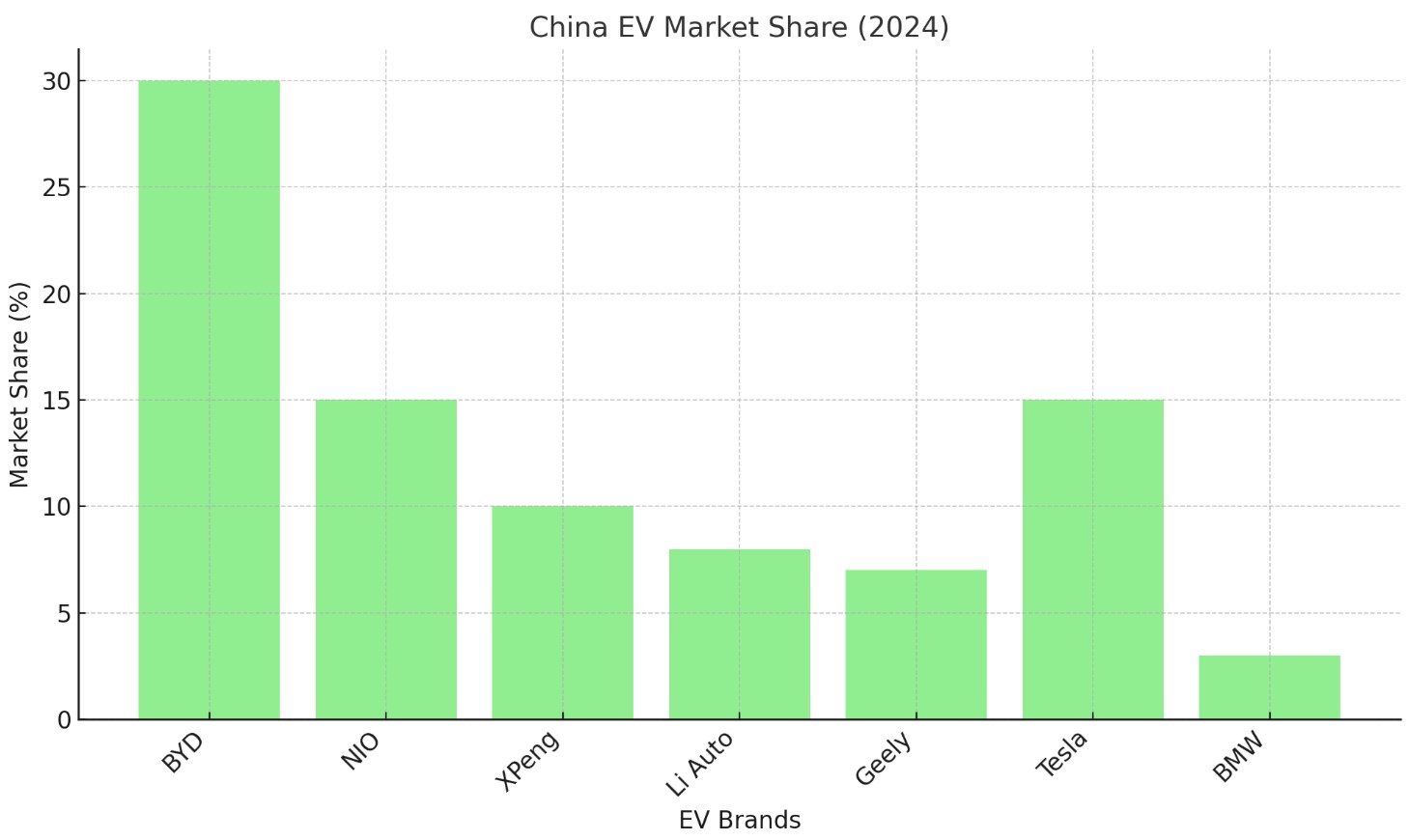
As of 2024, China holds more than 50% of the global electric vehicle market share, with the market’s value estimated at over USD 90 billion. The rapid development of the EV sector has not only accelerated the growth of the market but has also spurred the expansion of various related industries, including battery manufacturing, charging infrastructure, and technology-driven solutions for autonomous driving and vehicle connectivity. With government incentives, favorable policies, and increasing consumer awareness of environmental issues, the demand for EVs in China is set to continue rising.
Several key players dominate the EV market in China, ranging from established traditional automakers to new entrants with strong technological focus. This diverse landscape is driven by various factors such as innovation, production capacity, brand trust, and government support. Domestic brands have made significant strides in the market, while foreign players are rapidly adapting to local conditions.
Major Domestic Players in China’s EV Market
BYD
Market Share Overview
BYD, or Build Your Dreams, has been a leader in China’s EV market for several years. The company has not only capitalized on the demand for electric vehicles but also expanded its reach by diversifying its operations to include electric buses, batteries, and energy storage solutions. As of 2024, BYD holds a commanding market share of approximately 30% in China’s EV market, making it the largest EV manufacturer in the country.
Key Strengths and Factors Contributing to Market Share
- Strong Product Portfolio: BYD offers a wide range of electric vehicles, including sedans, SUVs, buses, and trucks, catering to various customer segments. The company’s strong presence in both the consumer and commercial EV markets has helped solidify its position as the top player in China.
- Battery Manufacturing and Innovation: BYD is also a leader in the production of batteries, a critical component in electric vehicles. The company manufactures lithium iron phosphate (LFP) batteries, which are known for their high efficiency and safety. BYD’s vertical integration of battery manufacturing and vehicle production gives it a competitive edge, allowing the company to manage costs and ensure supply chain control.
NIO
Market Share Overview
NIO, often referred to as the “Tesla of China,” is one of the most prominent electric vehicle manufacturers in the country. NIO primarily focuses on premium electric SUVs and sedans, aiming to capture the high-end market segment. As of 2024, NIO holds a market share of approximately 15%, positioning it as the second-largest player in China’s EV market.
Key Strengths and Factors Contributing to Market Share
- Premium Brand Appeal: NIO has established itself as a high-end electric vehicle brand, competing directly with foreign luxury brands like Tesla. The company’s vehicles are known for their advanced technology, stylish designs, and high performance. NIO’s brand positioning has attracted a loyal customer base in China, particularly among tech-savvy, environmentally conscious consumers.
- Battery Swap Technology: NIO has pioneered the development of battery swapping stations, which allow customers to exchange their EV batteries at designated locations. This innovative approach addresses one of the key challenges of electric vehicles—charging time. NIO’s battery swap stations have become an important part of the company’s strategy to differentiate itself in the crowded EV market.
XPeng Motors
Market Share Overview
XPeng Motors, a fast-growing EV manufacturer, has emerged as one of China’s top players in the electric vehicle sector. The company is known for its smart EVs, which integrate cutting-edge technology such as autonomous driving capabilities and intelligent infotainment systems. XPeng Motors currently holds a market share of around 10% in China’s EV market as of 2024.
Key Strengths and Factors Contributing to Market Share
- Technological Focus: XPeng is particularly focused on integrating autonomous driving features into its vehicles. The company has heavily invested in AI and machine learning to enhance its vehicles’ autonomous capabilities. XPeng’s commitment to developing smart EVs has given it a competitive edge, especially in a market increasingly interested in advanced technology.
- Affordability and Value: While XPeng’s vehicles offer cutting-edge technology, they are priced competitively, making them an attractive option for consumers seeking a high-tech EV without the premium price tag associated with other brands like NIO or Tesla. This positioning has allowed XPeng to expand its customer base rapidly.
Li Auto
Market Share Overview
Li Auto, a Chinese electric vehicle manufacturer, has also made significant strides in the market, particularly in the mid-range segment. The company is known for its innovative extended-range electric vehicles (EREVs), which use a combination of electric and gasoline engines to extend driving range. As of 2024, Li Auto holds around 8% of the Chinese EV market.
Key Strengths and Factors Contributing to Market Share
- Extended-Range Electric Vehicles (EREVs): Li Auto’s focus on EREVs has allowed it to cater to consumers who are hesitant about the limited driving range of traditional electric vehicles. By offering a hybrid solution, Li Auto has gained significant traction among customers who want the benefits of electric driving without the concern of running out of battery power on longer trips.
- Efficient Manufacturing and Cost Control: Li Auto has emphasized cost-effective manufacturing practices, which have allowed the company to offer its vehicles at competitive prices. Additionally, the company’s partnerships with other tech firms for vehicle components have helped keep production costs low, further enhancing the value proposition for consumers.
Geely
Market Share Overview
Geely is one of China’s largest automakers and has been a strong player in the electric vehicle market through its various brands, including Volvo, Polestar, and Lynk & Co. Geely’s EV market share in China is approximately 7%, making it one of the top domestic manufacturers in the sector.
Key Strengths and Factors Contributing to Market Share
- Strategic Partnerships: Geely has formed several strategic alliances, both domestically and internationally, to enhance its EV capabilities. The company’s acquisition of Volvo and its investment in Polestar have helped expand its global reach and technological expertise.
- Wide Product Range: Geely offers a broad range of electric vehicles, from budget-friendly options to premium models, making it an appealing choice for various customer segments. The company’s diverse offerings have helped it capture a large portion of the domestic EV market.
Foreign Players in China’s EV Market
Tesla
Market Share Overview
Tesla, the world’s leading electric vehicle manufacturer, has made substantial inroads into the Chinese market. Tesla’s Gigafactory in Shanghai, which began production in 2020, has significantly bolstered the company’s ability to meet the growing demand for EVs in China. As of 2024, Tesla holds around 15% of the market share in China’s EV market.
Key Strengths and Factors Contributing to Market Share
- Brand Recognition and Trust: Tesla’s reputation as a global leader in electric vehicles has given it a significant advantage in China’s competitive EV market. The company’s innovative approach to vehicle design, performance, and autonomous driving technology has earned it a strong following among Chinese consumers.
- Supercharger Network and Infrastructure: Tesla’s well-established Supercharger network in China plays a critical role in supporting the growth of the company’s EV sales. The extensive charging infrastructure makes it easier for Tesla owners to charge their vehicles, further promoting the adoption of EVs.
BMW
Market Share Overview
BMW, one of the most well-known luxury automakers in the world, has made significant strides in the electric vehicle market in China. The company’s EV models, such as the BMW i3 and BMW iX3, are gaining popularity, particularly among affluent consumers who desire a luxury electric vehicle. As of 2024, BMW holds a market share of around 3% in China’s EV market.
Key Strengths and Factors Contributing to Market Share
- Luxury and Performance: BMW’s reputation for luxury, performance, and advanced technology has made it a popular choice among consumers looking for premium electric vehicles. The company’s electric models are equipped with the latest technology and provide a driving experience that meets BMW’s high standards.
- Sustainability Initiatives: BMW has committed to expanding its EV offerings in China, aligning with the country’s growing interest in sustainable mobility. The company’s focus on reducing carbon emissions and producing more sustainable vehicles resonates with the increasing number of environmentally conscious consumers in China.
Other Notable Players
Other foreign players in China’s EV market include Volkswagen, Mercedes-Benz, and Audi, all of which have made significant investments in electric vehicle technology. These companies have also established production facilities in China to meet the growing demand for electric vehicles.
- Volkswagen: Volkswagen has made considerable investments in its electric vehicle lineup in China, with plans to launch several new models. The company aims to become one of the top players in China’s EV market by leveraging its strong brand presence and broad product portfolio.
- Mercedes-Benz: Mercedes-Benz has focused on introducing luxury electric vehicles to the Chinese market, particularly through its EQ sub-brand. The company’s emphasis on high-end features, performance, and design has attracted affluent consumers looking for premium EV options.
- Audi: Audi has committed to expanding its EV offerings in China, with a focus on both luxury sedans and SUVs. The company’s focus on combining cutting-edge technology with high-end design has helped it capture the interest of the premium segment in the EV market.
Key Trends in China’s EV Market
- Government Incentives and Support: The Chinese government continues to provide substantial incentives for consumers and manufacturers to promote the adoption of electric vehicles. These incentives include subsidies for vehicle purchases, tax breaks, and support for EV infrastructure development. The government’s strong push for clean energy vehicles has played a significant role in the rapid growth of China’s EV market.
- Charging Infrastructure Expansion: The expansion of charging infrastructure is another key trend in the Chinese EV market. As more consumers adopt electric vehicles, the demand for accessible and convenient charging stations has grown. Both the government and private companies are investing heavily in building a nationwide network of charging points to support the adoption of EVs.